cat -- '2026-09-28-security.md' Security News
Schneier on Security
Security news and analysis by Bruce Schneier
New Attack Against RSA - September 28, 2026
ArsTechnica is reporting on a “new” attack against RSA, one that bypasses factoring.
First, this attack isn’t new. The original research is from 2007. What is new is the implementation.
Second, it is a forgery attack. It allows an attacker to forge digital signatures. It does not recover the private key from the public key.
Third, the attack only works against pure signatures. That is, signatures without any formatting or padding. This is not generally how we use RSA in practice.
Fourth, speed is all relative. This is not a polynomial-time algorithm; it’s a subexponential-time algorithm. But it is somewhat faster than factoring. The authors were able to forge messages for 1024-bit RSA with 1380 CPU core-years (over five real-world months)...
SecurityWeek
Latest cybersecurity news
Google Warns of ShinyHunters’ Fresh Oracle PeopleSoft Campaign - September 28, 2026
The extortion group has modified its exploit in new attacks targeting the PeopleSoft vulnerability CVE-2026-35273.
The post Google Warns of ShinyHunters’ Fresh Oracle PeopleSoft Campaign appeared first on SecurityWeek.
Nvidia Unveils AI Agent Safety Platform With Hardware-Based Watchdog - September 28, 2026
The platform combines open source software and a reference system design to keep AI agents within set boundaries.
The post Nvidia Unveils AI Agent Safety Platform With Hardware-Based Watchdog appeared first on SecurityWeek.
Kiteworks Urges Server Shutdown, Finds Advanced Forms Vulnerability - September 28, 2026
The company says the measure was precautionary and that it has no evidence of Kiteworks or customer systems being compromised.
The post Kiteworks Urges Server Shutdown, Finds Advanced Forms Vulnerability appeared first on SecurityWeek.
The Hacker News
Cybersecurity news and insights
JADEPUFFER-Linked Attackers Used Compromised Service Principals to Delete Azure Resources - September 28, 2026
The threat actor known as JADEPUFFER has been observed orchestrating destructive actions within a Microsoft Azure environment using compromised service principals.
Microsoft, which is tracking the activity under the name Storm-3168, has called it an evolution of the threat actor’s tradecraft. The attack took place in early June 2026 over a period of about 18 hours.
“The destructive operations
SecurityWeek
Latest cybersecurity news
Citrix Confirms 2 NetScaler Zero-Days After Admins Pulled the Plug - September 28, 2026
Citrix has released patches for the critical NetScaler vulnerabilities tracked as CVE-2026-88771 and CVE-2026-88772.
The post Citrix Confirms 2 NetScaler Zero-Days After Admins Pulled the Plug appeared first on SecurityWeek.
The Hacker News
Cybersecurity news and insights
CISA Says Attackers Are Exploiting Two Critical Citrix NetScaler Flaws Globally - September 28, 2026
The U.S. Cybersecurity and Infrastructure Security Agency (CISA) on Sunday added two critical Citrix NetScaler ADC and Gateway flaws to its Known Exploited Vulnerabilities (KEV) catalog, following reports of active exploitation.
The vulnerabilities are listed below -
CVE-2026-88771 (CVSS score: 9.5) - An improper input validation vulnerability that could allow an unauthenticated attacker to
SecurityWeek
Latest cybersecurity news
Microsoft SharePoint Flaw CVE-2026-65660 Now Exploited in Attacks - September 27, 2026
CISA added CVE-2026-65660 to its KEV catalog, giving federal agencies a patching deadline of September 28.
The post Microsoft SharePoint Flaw CVE-2026-65660 Now Exploited in Attacks appeared first on SecurityWeek.
The Hacker News
Cybersecurity news and insights
Warning: Two Unpatched Citrix NetScaler RCE Zero-Days Under Active Exploitation - September 27, 2026
Two critical vulnerabilities in Citrix NetScaler ADC and NetScaler Gateway that allow remote code execution have been exploited in the wild, Citrix confirmed on September 27. It released fixes for both, along with six other flaws. One of the two affects every deployment on an affected version, including those in the default configuration.
The bulletin came a day after security firm watchTowr
Lunex Stealer Abuses AMD Driver to Disable Security Monitoring and Steal Browser Credentials - September 26, 2026
The Psychedelic Stealer malware distributed via compromised Ukrainian websites using ClickFix-style Cloudflare verification checks is part of a wider malware-as-a-service (MaaS) platform called Lunex.
The new findings come from Ontinue, which described the activity as a four-stage attack chain aimed at targeting Ukrainian-speaking users.
“The attack chain begins with a fake CAPTCHA page and
SecurityWeek
Latest cybersecurity news
New x47.c Windows Botnet Weaponizes xAI Grok, AI API Draining - September 26, 2026
The Windows botnet relies on AI to maintain persistence, using xAI Grok to choose from predefined actions.
The post New x47.c Windows Botnet Weaponizes xAI Grok, AI API Draining appeared first on SecurityWeek.
The Hacker News
Cybersecurity news and insights
Attackers Bypass WAFs to Exploit Oracle PeopleSoft Flaw and Deploy Web Shells - September 26, 2026
Google is warning of renewed mass exploitation of a known security vulnerability in Oracle PeopleSoft as part of a campaign targeting multiple sectors globally.
The ShinyHunters-linked activity involves the weaponization of CVE-2026-35273 (CVSS score: 9.8), a critical security flaw that could result in unauthenticated remote code execution.
The vulnerability was first exploited as a zero-day
Zero Trust for AI Agents Starts With Fixing Zero Visibility - September 26, 2026
The way we talk about AI agents is shifting, and the way we implement them requires an even more fundamental shift. While earlier discourse focused on how quickly organizations could stand up agents and how much productivity they could promise, a string of recent incidents, including a widely discussed intrusion at Hugging Face during an evaluation of OpenAI agents, has spurred organizations to
SecurityWeek
Latest cybersecurity news
OpenAI Says Its Models Engaged With US Government Websites in New Model Misbehavior Disclosure - September 26, 2026
OpenAI’s CEO said there is an “extensive and ongoing review related to our agents’ use of internet access during training and evaluation.”
The post OpenAI Says Its Models Engaged With US Government Websites in New Model Misbehavior Disclosure appeared first on SecurityWeek.
The Hacker News
Cybersecurity news and insights
Elementor CSRF Flaw Lets Attackers Take Over Sites After Admin Clicks Crafted Link - September 26, 2026
Details have emerged about a high-severity security flaw in the Elementor Website Builder WordPress plugin that could be exploited by an unauthenticated attacker to create rogue administrator accounts and take control of a site.
The cross-site request forgery (CSRF) vulnerability, which has yet to be assigned a CVE identifier, carries a CVSS score of 8.8 out of 10.0. It only affects versions
SharePoint RCE and MikroTik RouterOS Flaws Actively Exploited in the Wild - September 26, 2026
The U.S. Cybersecurity and Infrastructure Security Agency (CISA) on Friday added two security flaws impacting Microsoft SharePoint and Mikrotik RouterOS to its Known Exploited Vulnerabilities (KEV) catalog, citing evidence of active exploitation.
The vulnerabilities in question are as follows -
CVE-2026-65660 (CVSS score: 8.8) - A code injection vulnerability in Microsoft Office SharePoint
Kiteworks Urges Customers to Shut Down Systems for 9 Hours Over Possible Cyber Attack - September 26, 2026
Kiteworks (formerly Accellion) is urging customers to shut down their systems as a precautionary measure for nine hours over the weekend after it received threat intelligence about an imminent cyber attack.
“Kiteworks received credible threat intelligence from federal intelligence authorities indicating that a threat actor may attempt to target some Kiteworks systems,” said Frank Balonis, Chief
SecurityWeek
Latest cybersecurity news
In Other News: Clop Leak Site Takeover, Docker Botnet Hunts AI Keys, Water Utility Exposure - September 25, 2026
Noteworthy stories that might have slipped under the radar: BragJack attack against browser AI assistants, TDengine flaw threatens industrial telemetry uptime, Ubuntu update overhaul.
The post In Other News: Clop Leak Site Takeover, Docker Botnet Hunts AI Keys, Water Utility Exposure appeared first on SecurityWeek.
The Hacker News
Cybersecurity news and insights
Compromised GitHub Actions Came Back Online and Resumed Executing Mini Shai-Hulud Malware - September 25, 2026
Two actions-cool GitHub Actions have been disabled for a second time after the repositories became accessible last week, months after they were compromised during the May 2026 Mini Shai-Hulud campaign.
The affected GitHub Actions are listed below -
actions-cool/issues-helper actions-cool/maintain-one-comment
Visiting either of the repositories now shows the message: “Access to this
Trail of Bits Blog
Security research and insights from Trail of Bits
Don’t let TEEs break your MPC - September 25, 2026
Threshold signature schemes, a form of multi-party computation (MPC) that lets a set of parties sign together without any one of them holding the key, are increasingly deployed inside trusted execution environments (TEEs). The combination is intended to amplify security for sensitive computations: MPC distributes trust across multiple independent parties, while TEEs root trust in the hardware manufacturer and its attestation infrastructure. But subtle issues can arise when running an MPC protocol inside a TEE without accounting for the untrusted host: for example, a malicious host could roll back the filesystem state after a threshold signer deletes a used pre-signature, causing the signer to reuse their nonce share and disclose their private key share.
So is this combination worth it? Provided you treat the TEE as a defense-in-depth layer rather than a substitute for a sound protocol, the answer is yes. This blog post discusses what TEE attestation can and can’t fix in MPC deployments, explores the pitfalls we see most often in audits, and covers best practices, such as incorporating strong attestation processes and binding them to the MPC parties’ identities.
MPC: Security that depends on participant behavior
Before diving into how TEEs and MPC interact, we need to understand what MPC means and what security guarantees it offers. MPC is a cryptographic technique that allows multiple parties to jointly compute a function over their private inputs without revealing those inputs to each other.
The security of MPC protocols depends critically on assumptions about participant behavior. The cryptographic literature uses two primary security models:
Semi-honest (honest-but-curious) security: In this model, all participants follow the protocol exactly as specified, but they may try to learn additional information from the messages they receive during the protocol execution. Participants can try to learn more than they should, but they don’t deviate from the protocol specification.
Malicious security: This stronger model assumes participants may deviate arbitrarily from the protocol. A malicious participant might send incorrectly computed values, use wrong inputs, abort the protocol at strategic moments, and behave in ways designed to compromise security or learn private information.
This distinction is important in the context of TEEs. If a TEE attestation can cryptographically guarantee that all parties are running the correct protocol implementation, it effectively elevates semi-honest protocols to provide malicious security guarantees (at least against certain classes of attacks, as we’ll discuss later). But before delving into the details, let’s discuss how TEEs work.
TEEs: Three core security guarantees
TEEs are secure areas within a processor that provide hardware-based protection for code and data, even from privileged software like operating systems or hypervisors. TEEs offer three core security guarantees:
Confidentiality: Data and code are encrypted in memory and accessible only from within the TEE. This ensures that even privileged system software cannot inspect the contents of the secure computation.
Integrity: The data and code are protected from tampering. Any attempt to modify the TEE’s memory or execution state from outside should be detected.
Attestation: Remote parties can cryptographically verify what code is running in the TEE. This allows external verifiers to gain assurance about the computation being performed and the legitimacy of the TEE without trusting the host system.
This last property is particularly crucial for building distributed systems with TEEs.
How TEE attestation works
The attestation mechanism is at the heart of TEE security. When a TEE is manufactured, it’s provisioned with a private key and a corresponding certificate that chains back to a root certificate held by a trust anchor (typically the manufacturer).
When an attestation is requested, the TEE takes measurements (cryptographic hashes of the TEE software, configuration, and hardware state). These measurements are bundled into a “quote” (a manifest of these cryptographic hashes), which the TEE then signs with its private key.
To verify these attestations, a number of checks need to be performed. However, the checks necessary in the verification process aren’t uniformly defined and are somewhat vendor-specific. For instance, Intel’s TDX documentation states:
TD Quote Verification is the process by which a TD Quote is verified in a remote attestation flow. This verification can be done by any party and the checks performed are defined by this party.
This places significant responsibility on developers, who might not fully understand what checks are required to ensure the security of the TEE deployment.
At a minimum, a proper verification process requires:
- Verifying the quote signature
- Verifying the certificate chain back to the trusted root
- Verifying the actual measurements against known-good values (often stored in binary transparency logs)
This means deploying TEE-based systems involves not just cryptographic verification but also reproducible builds and binary transparency infrastructure. The measurements in the attestation quote are simply hashes; they don’t inherently indicate whether the code is correct or malicious. To verify that the TEE is running the intended software, what is required is a trusted source of reference measurements. Reproducible builds ensure that anyone can compile the same source code and arrive at identical binaries (and thus identical measurements). Binary transparency logs provide a tamper-evident record of what measurements correspond to what software versions, allowing verifiers to check that the TEE is running legitimate, audited code rather than a compromised variant. This piece is often overlooked in TEE deployments.
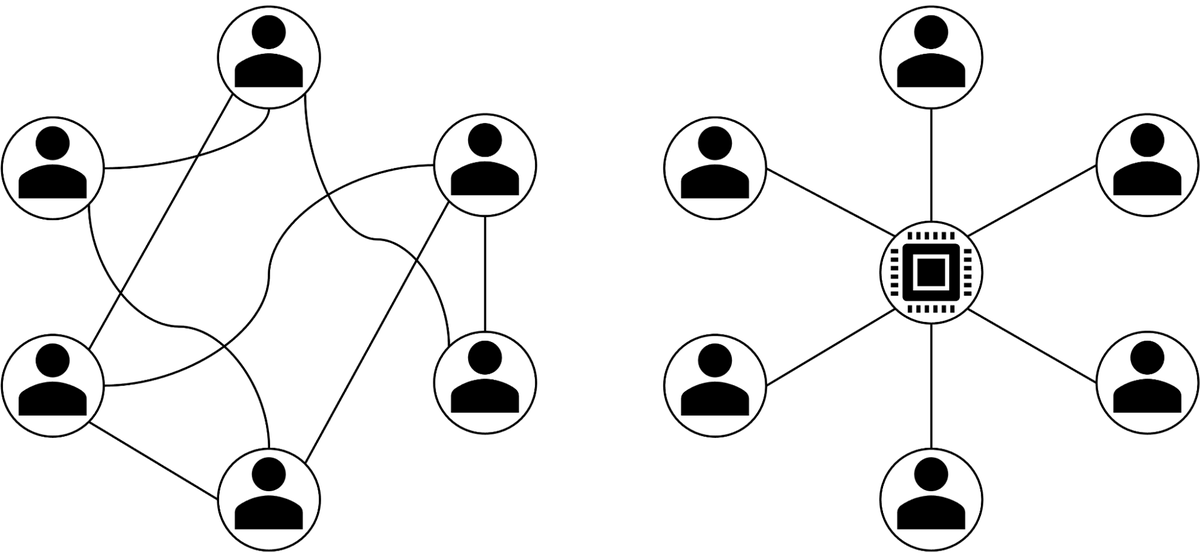
The trust model clash
Here’s where things get interesting. Multi-party computation is fundamentally about distributing trust among multiple participants. No single party should be able to compromise the computation. TEEs, in contrast, centralize trust in the hardware manufacturer that controls the root certificate.
Another important threat model shift to consider is the fundamental inversion of traditional security assumptions in TEEs. Historically, we trusted the host operating system and built our security models on that foundation. TEEs flip this on its head: they’re virtualized environments where the guest (the code running inside the TEE) is trusted, but the host system is explicitly considered untrusted and potentially malicious.
This shift creates new attack surfaces that didn’t exist in traditional computing models. While the TEE protects the guest environment from the host, the host still controls critical operations like I/O, memory management, and CPU scheduling. The host can deny service, manipulate timing, or attempt rollback attacks, leading to subtle breaks of MPC protocols.
What TEEs can (and can’t) fix in MPC deployments
Combining these technologies can be beneficial, but one must be careful about the security claims that can be made. The security gains are real only if the TEE implementation is sound and the attestation process verifies the right properties. When TEEs attest to incomplete measurements or fail to verify critical components, the attestation provides false assurance. The actual security posture may even be weakened by the added complexity.
In an attempt to narrow down what TEEs can fix in MPC implementations, we’ve identified the common categories of MPC issues we frequently encounter in security audits:
- Ambiguous encoding in hash functions (e.g., “YOLO” is not a valid hash construction)
- Misbehaving participants
- Missing parameters in Fiat-Shamir transforms (e.g., Coordinated disclosure of vulnerabilities affecting Girault, Bulletproofs, and PlonK)
- Missing input validation (e.g., Breaking the shared key in threshold signature schemes)
- Side-channel attacks
- Protocol-level issues (e.g., Friends don’t let friends reuse IVs)
Arguably, if TEEs were perfectly secure, they could effectively mitigate the first four categories. When attestation and measurement processes are correctly implemented, each party gains cryptographic assurance about what code the other parties are running. This is powerful: if a party can verify that all other participants are running the exact protocol implementation expected (with no modifications or protocol deviations), then they know other participants will follow the protocol correctly and won’t misbehave by sending malformed messages. Essentially, correct attestation eliminates entire classes of implementation vulnerabilities by ensuring protocol compliance on both the sender and receiver sides. However, perfect security doesn’t exist in practice. Real-world TEE implementations have vulnerabilities, attestation processes can be incomplete or incorrectly verified, and the adversarial host environment introduces attack surfaces that are not traditional to MPC deployments.
A cautionary tale: Rollback attacks with threshold signatures in TEEs
Consider threshold signature schemes, which often use pre-signature optimizations. In Schnorr or ECDSA threshold signatures, participants can precompute nonce commitments independently of the message, speeding up the online signing phase. These precomputed nonce commitments are called pre-signatures, and the reuse of a pre-signature value by a participant leads to the leak of their private share (akin to how nonce reuse in traditional Schnorr and ECDSA signatures leads to private key recovery).
It might be tempting to run such an MPC protocol inside a TEE enclave to mitigate these types of attacks. But subtle issues can arise. In some implementations, signers store pre-signatures to disk and delete them after use (to limit the possibility of reuse). If that application were deployed to a TEE in a trust model where the host is potentially malicious, the host could roll back the filesystem state after the signer deletes a pre-signature file. When the TEE later fetches the pre-signature contained in that file, the signer essentially reuses their nonce share, which leads to a disclosure of the private key share. This is also discussed in the blog post A trail of flipping bits.
Common TEE pitfalls
Beyond the rollback issue, several other pitfalls frequently appear:
Incomplete attestation measurements: The security of TEE attestation hinges on measuring the right things. An attestation quote contains hashes of code and data, but project developers determine what gets measured and what gets excluded. If critical components aren’t included in the measurements, an attacker can modify those components without detection. This is particularly risky because the attestation appears cryptographically valid, but it’s attesting to an incomplete picture of the execution environment. For example, installing tools in an enclave from remote sources at runtime (e.g., using curl) pulls in code that was never measured; an attacker gaining access to that source can substitute their own and gain code execution inside the enclave.
A real-world example demonstrates this risk: a vulnerability in Meta’s WhatsApp Private Inference revealed that the attestation process didn’t include certain configuration files, enabling an attacker to inject malicious shared libraries with the LD_PRELOAD environment variable, potentially compromising the TEE while maintaining a valid attestation quote.
Missing verifications: The attestation process requires multiple verification steps, each critical to the security guarantee. Verifiers must check the quote signature, validate the certificate chain back to the manufacturer’s root certificate, confirm that the measurements match expected values, etc. Skipping any of these steps breaks the security model. Because verification procedures vary across TEE vendors and aren’t always well-documented, implementations sometimes omit crucial checks.
Lack of hardening: A TEE protects whatever runs inside it, including components that may not be needed. Redundant kernel drivers, overly permissive kernel config flags, stray ACPI table entries, unnecessary systemd services and timers, and weak entropy sources all increase the attack surface inside the trust boundary. Trim the image down to what the project requires, harden what remains, and measure it. For platform-specific guidance, see our notes on the AWS Nitro Enclaves attack surface.
Data availability and backups: Enclaves have limited persistent storage, so backups and recovery data typically live outside the trust boundary. Authenticated encryption provides confidentiality and integrity but not freshness, so a malicious host can serve a stale backup to force a rollback, as discussed earlier in our threshold signature example. More concretely, one recurring failure is a guest trusting attacker-controlled metadata that lives on disk: the disclosure of several vulnerabilities in LUKS2 disk encryption for confidential VMs shows that a malleable, unvalidated LUKS2 header lets an attacker with disk write access swap in a null cipher, leaving the guest reading and writing secrets on an effectively unencrypted volume.
Side-channel and physical attacks: Because the untrusted host controls the TEE’s execution environment, it can perform various side-channel attacks to extract information about the guest’s computation. These can leak sensitive information and break a TEE’s confidentiality guarantees. Similarly, researchers regularly publish physical attacks on TEE hardware. For example, the recent “TEE fail” attack allows an attacker to break the security guarantees of Intel TDX and AMD SEV-SNP by using a memory interposition device that lets them physically inspect all memory traffic inside a DDR5 server. The more recent DDRop attack goes even further: an interposer costing under $200 silently drops DDR5 writes, so the processor keeps reading stale data that still decrypts correctly, breaking the integrity of Intel TDX, Scalable SGX, and AMD SEV-SNP. Memory encryption without freshness fails the same way disk state does in the rollback example above.
Centralization risks: When MPC aims to distribute trust but TEEs centralize it in the manufacturer and its attestation infrastructure, the security goals of the protocol may be undermined. If all parties in an MPC protocol run their TEE nodes on the same TEE vendor’s hardware or if they use the same cloud provider, trust becomes centralized in that provider (for example, by way of the attestation chaining back to that vendor-operated root of trust).
Insecure defaults: Be aware of some of the limitations that vendor-provided verification tools have. For example, Intel tools allow known-vulnerable firmware versions to pass the remote attestation process for one year after public disclosure. Users might want to implement their own security version number validation on top of the defaults to enforce stricter deadlines.
Best practices for combining TEEs and MPC
If you’re building systems that combine these technologies, consider these recommendations:
Implement strong attestation processes: Bind attestations to the identities of MPC parties and verify them comprehensively. This means not just checking that an attestation is valid but also confirming that the specific party you expect to be running the code is actually the one presenting the attestation.
Terminate peer-to-peer communications inside TEEs: This provides end-to-end protection for party communications. By establishing TLS or other encrypted channels directly between TEEs (with endpoints inside the secure enclaves), you prevent the untrusted host from observing or tampering with protocol messages.
Perform comprehensive verification of the attestation and measurements: Refer to your specific TEE vendor’s documentation for the necessary checks to be performed, and ensure every verification step is implemented correctly, tested, and reviewed.
Write constant-time code: This helps prevent timing side-channel attacks. Even within a TEE, timing variations in your cryptographic operations can leak information to a host performing careful measurements. Use constant-time implementations for all security-critical operations processing secrets.
Consult vendor-specific guidance: Each TEE platform has unique characteristics, limitations, and recommended practices. Vendor documentation often includes details about platform-specific threats. Stay current with security advisories and updates, as TEE security is an active research area with new vulnerabilities regularly discovered. Follow best practices documentation, like our guidance for AWS Nitro Enclaves.
Use multiple TEE vendors: For defense in depth, consider running MPC protocols on TEEs from different manufacturers (and/or cloud providers) to avoid centralizing trust in a single vendor. While admittedly challenging in practice since it requires additional operational complexity, this diversity can be essential for high-security applications where trust distribution is critical.
Layered trust beats either layer alone
Combining MPC and TEEs is not automatic security, but when done correctly, it represents a defense-in-depth strategy that’s stronger than either technology alone. TEEs can effectively mitigate several categories of MPC vulnerabilities by cryptographically guaranteeing correct protocol execution. Meanwhile, MPC’s distributed trust model reduces the impact of TEE manufacturer centralization and may provide security even if individual TEE instances are compromised.
However, this benefit only materializes when both layers are correctly implemented. New vulnerabilities can emerge from their interaction, as we saw with the rollback attack example. Successful deployment requires following established best practices, implementing thorough attestation verification, and carefully reviewing the implementation and deployment procedure.
The intersection of these technologies represents the cutting edge of secure computation, but only if we approach it with a clear understanding of the tradeoffs involved. If you’re deploying MPC on TEEs, our cryptography team reviews these exact systems, so get in touch!